
Feeling is not a fact
In development, it's very easy to deceive yourself. You open a website, click, wait, and think "something is working slowly." The problem is, that's not a fact. It's a feeling. I had a specific case. I noticed that adding an item to the cart was working slowly, it was quite noticeable. I wanted to optimize it immediately. I went to the CTO. The response was simple: "until you show the numbers, we won't touch anything." The correct response. Without numbers, you're not solving the problem, you're guessing.

First Metrics
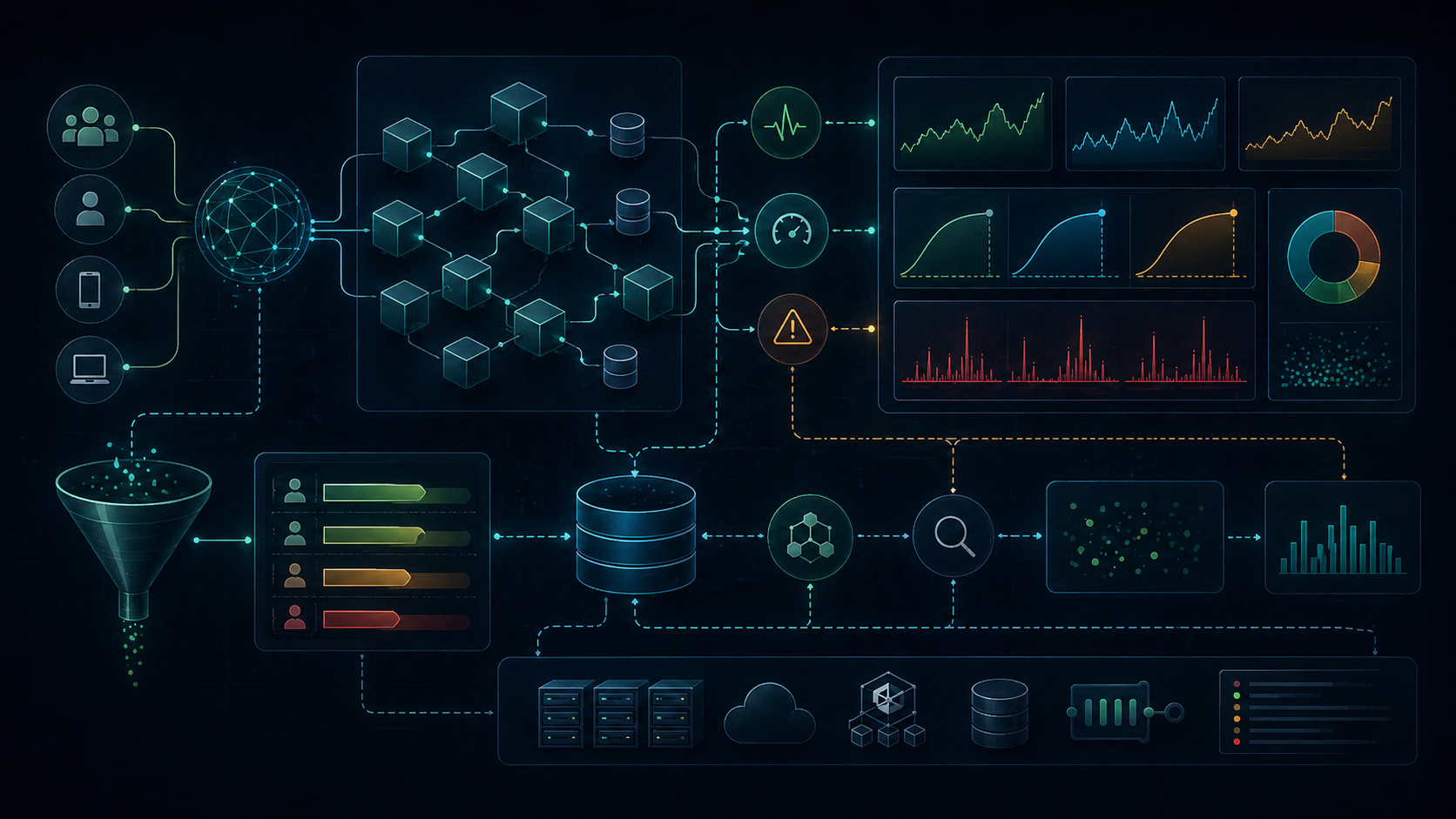
At that time, we didn't have any proper metrics at all: no latency, no errors, no understanding of where exactly the problem was. We started with the basics: connected Prometheus, set up Grafana, and began collecting data. Only after this did it become clear where exactly the system was lagging. Then we involved the product team and looked at the funnel: where users were dropping off and how it affected conversion. Technically, the system was working, with few errors, nothing was crashing. But the metrics showed: there was a delay, users were getting lost, money was being lost. After this, we could make decisions rather than guess. As a result, the conversion increased by 2-3 times.
What to watch
The average latency value is almost useless. It's important to look at p95 and p99, what happens with the "worst" users, because they are the ones who leave and do not make purchases. Error rate is not only 500 errors, it includes timeouts, unsuccessful operations, partial failures. And most importantly, product metrics: how the technical state of the system affects conversion and revenue. Without metrics, architecture turns into opinion: "it seems faster", "let's rewrite it", "I don't like it". This is not engineering. This is guessing.
Metrics and Growth
If you want to grow, you need to stop thinking only in code. At the middle level and above, you are expected not just to "write code," but to improve the system with measurable results. This means being able to set a metric, read it, link it to a problem, and propose a solution. If there are no metrics in your project, you are working blindly. Even if it seems that everything is fine.